

Today is Martin Luther King Jr. Day.
A day to reflect. A day to remember. A day to ask ourselves: How are we serving others?
Dr. King once said, “Life’s most persistent and urgent question is: What are you doing for others?”
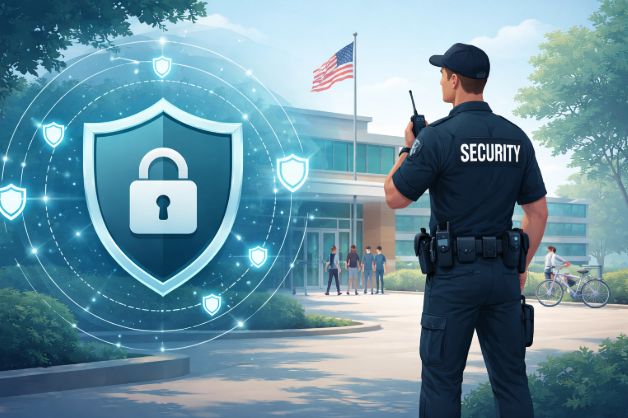
For those of us in the security field, especially those protecting schools, that question hits different.
Because when you strip away the firewalls, the access controls, the incident response plans, and the compliance frameworks, you’re left with one simple truth: We’re not protecting data. We’re protecting people: Kids. Teachers. Staff. Entire communities.
That’s not a job. That’s a MISSION.
Security Risk Management Is About More Than Risk
Let’s be honest.
The term “security risk management” sounds cold. Clinical. Like something you’d find in a boardroom PowerPoint.
But in K-12 schools and higher education institutions, security risk management is deeply human.
It’s the reason a first-grader can walk into school without fear. It’s why a college student can study late in the library without looking over their shoulder. It’s how a teacher can focus on teaching instead of worrying about what-ifs.
Research consistently demonstrates that school security transcends routine operational procedures because it fundamentally protects the conditions necessary for human development and learning (National Institute of Justice, 2024). Beyond deterring threats, effective school security creates a foundation for educational success that benefits entire communities.
When students feel safe, they concentrate better. They participate more. They thrive.
When parents trust that their children are protected, attendance rates improve, and a positive school culture emerges.
Security enables learning. Learning transforms futures.
That’s the MISSION.

The Human-Centered Approach to School Security
Here’s where many institutions get it wrong.
They treat security as a checkbox. A line item. A “set it and forget it” project.
Install some cameras. Update the antivirus. Done.
But mission-driven security is different.
It starts with people, not technology.
The primary mission of school security is protecting human life, with students and staff at the center of this commitment (Campus Safety Magazine, 2025). This mission extends into psychological and emotional dimensions: a secure environment reduces stress and anxiety, enabling better mental health for both students and staff.
This isn’t soft. This is strategic.
A student who feels safe doesn’t just perform better academically; they develop into a healthier, more engaged member of society. A teacher who feels protected doesn’t just teach better, they stay in the profession longer.
Security is the foundation. Everything else is built on top of it.
Physical and Cybersecurity: Two Sides of the Same Coin
Too many schools still operate in silos.
The facilities team handles physical security: locks, cameras, and access badges.
The IT team handles cybersecurity: firewalls, email filters, and endpoint protection.
They rarely talk to each other.
That’s a problem.
Because today’s threats don’t respect those boundaries.
A phishing email can disable a building’s access control system. A tailgater can plug a USB device into an unlocked door and an unattended workstation. A ransomware attack can lock down emergency communication systems right when you need them most.
Physical and cyber security must converge.
At Credo Cyber Consulting, we’ve written extensively about this in our proven framework for protecting your whole organization. The takeaway is simple: you can’t protect people if you’re only protecting half the attack surface.
For K-12 and higher education leaders, this means:
- Unified risk assessments that evaluate both physical vulnerabilities (unlocked doors, blind spots) and cyber vulnerabilities (outdated software, weak passwords)
- Cross-functional teams where facilities and IT staff train together on incident response
- Integrated monitoring that correlates physical access logs with network activity
This isn’t about buying more tools. It’s about breaking down silos and thinking holistically.
What Mission-Driven Security Looks Like in Practice
Let’s get specific.
Mission-driven security isn’t a philosophy. It’s a practice. It shows up in daily decisions.
1. Relationship-Building Over Rule-Enforcing
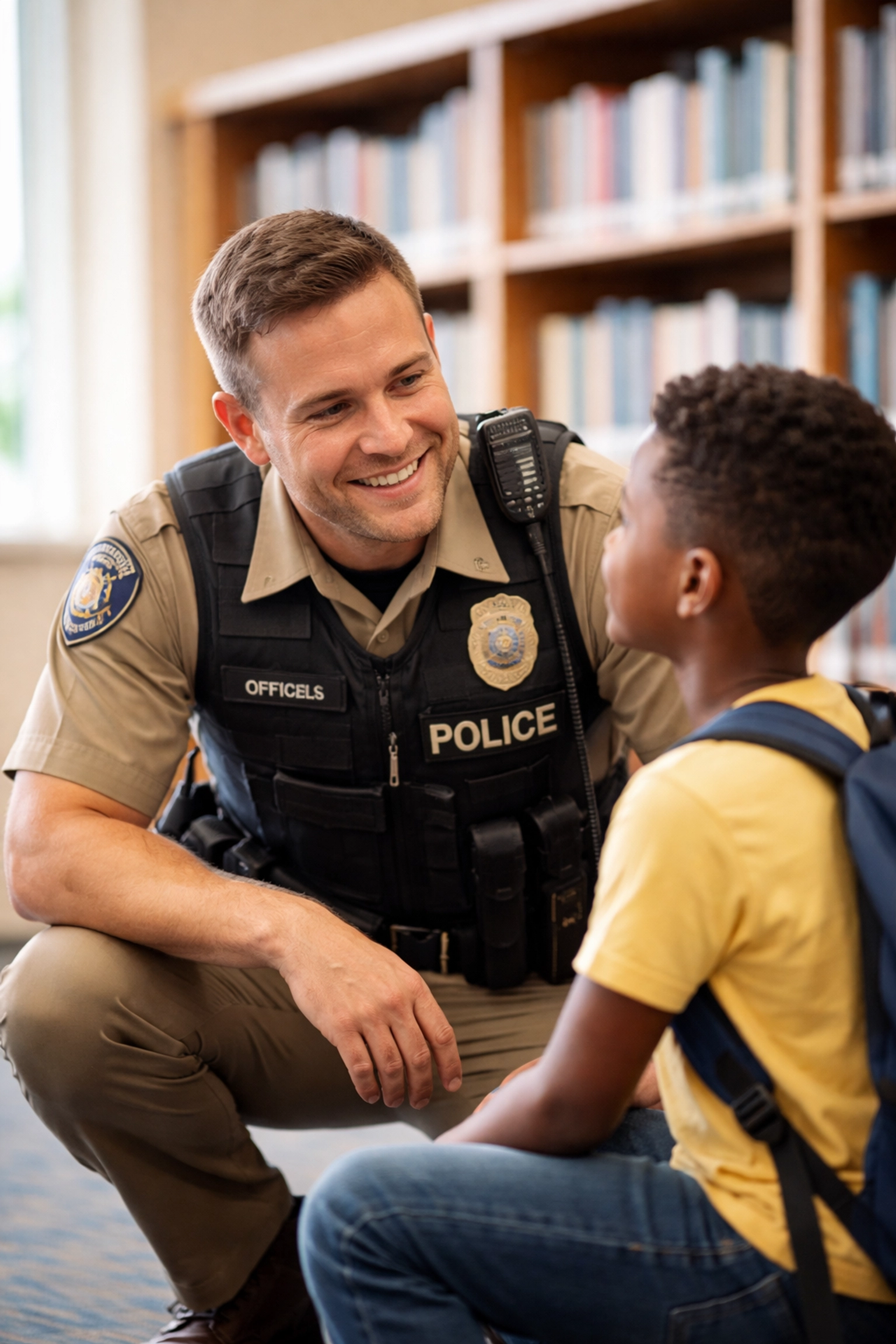
Security personnel, whether School Resource Officers, campus safety teams, or IT staff, should be visible, approachable, and trusted. Research indicates that security professionals who build relationships with students create trust, teach safety awareness, and act as bridges between schools and local law enforcement (National Association of School Resource Officers, 2025).
This isn’t about being a cop. It’s about being a mentor.
2. Age-Appropriate Education
Students at every level should understand safety measures: not to scare them, but to empower them. A kindergartener can learn “stranger danger.” A high schooler can learn to recognize phishing attempts. A college student can learn to report suspicious behavior without stigma.
3. Community Involvement
Parents, local businesses, and community organizations should be engaged in safety initiatives. Security isn’t the school’s problem alone. It’s everyone’s responsibility.
4. Regular Drills and Training
Emergency preparedness isn’t a one-time event. Staff training in security protocols, regular emergency drills to reinforce procedures, and tabletop exercises for leadership should be ongoing.
5. Balanced Security That Doesn’t Feel Like a Prison
Here’s the tension: schools need to be safe, but they also need to be welcoming. Effective security strategies work closely with administrators to develop approaches that balance safety with maintaining an open educational environment (International Association of Campus Law Enforcement Administrators, 2024).
Metal detectors at every entrance might stop a weapon. They also might make students feel like suspects. Mission-driven security finds the balance.
The Measurable Impact of Getting This Right
This isn’t just feel-good talk. Schools that prioritize security as a mission see tangible results:
- Fewer incidents of violence, vandalism, and theft
- Faster emergency response times when incidents do occur
- Increased confidence from parents, students, and staff
- Better learning outcomes across the board
These results create positive cycles. Safety enables focus. Focus enables learning. Learning transforms futures.
And those futures? They’re the next generation of doctors, teachers, engineers, and leaders.
That’s what we’re protecting.
This Week’s Checklist for School Leaders
Reflection is good. Action is better.
Here are five things K-12 and higher education leaders can do this week to strengthen their mission-driven security posture:
- Walk the campus with fresh eyes. Look for physical vulnerabilities: propped doors, blind spots, outdated signage. Take notes.
- Schedule a 30-minute sync between IT and facilities. Ask one question: “What threats are we each seeing that the other team should know about?”
- Review your emergency communication plan. When was it last tested? Does everyone know the protocol? Update contact lists.
- Audit one high-risk digital system. Pick your student information system, your HVAC controls, or your door access system. Is it patched? Who has admin access?
- Have a conversation with students. Ask them: “Do you feel safe here? What would make you feel safer?” Listen without defending.
None of these requires a budget. They require intention.
Security Is Service
Dr. King reminded us that everyone can be great because everyone can serve.
For those of us in the security profession, especially those protecting schools, service is the job.
Every risk assessment, every incident response plan, every training session, every policy update is an act of service.
We’re not protecting servers. We’re protecting students.
We’re not defending networks. We’re defending futures.
That’s not a job. That’s a calling.
Ready to build a mission-driven security program for your school or university?
Credo Cyber Consulting partners with K-12 districts and higher education institutions to develop comprehensive, human-centered security strategies that protect what matters most: your people.
For more on security risk management fundamentals, explore our Beginner’s Guide to Mastering Mission-Driven Protection.