


The convergence of physical and digital threats represents one of the most significant challenges facing organizations today. As the boundaries between physical infrastructure and cybersystems continue to blur, traditional siloed approaches to security have become increasingly inadequate. Modern threats exploit vulnerabilities that span both domains: from USB drops in parking lots that compromise networks to insider threats that combine physical access with digital exploitation.
Research indicates that by 2027, approximately 60 percent of enterprises will converge their cyber and physical security operations, recognizing that integrated security frameworks are essential for comprehensive organizational protection. This shift reflects a fundamental understanding: effective security risk management requires a holistic approach that addresses the interconnected nature of contemporary threats.
For corporate leaders, higher education administrators, and K-12 decision-makers, the imperative to integrate physical and cyber security extends beyond mere risk mitigation. It represents a strategic opportunity to enhance operational efficiency, streamline compliance efforts, and build organizational resilience against evolving threat landscapes.
The Three-Phase Integration Framework
A proven methodology for achieving comprehensive security integration follows a structured three-phase approach: Plan, Enhance, and Monitor & Optimize. This framework addresses the common organizational challenge of maintaining separate security systems where physical security falls under facilities management, while cybersecurity resides within IT departments, creating dangerous gaps in overall protection.

Phase One: Plan
The planning phase establishes the foundation for successful integration by engaging stakeholders across organizational boundaries. This critical first step involves justifying the business value of integration to executive leadership, clearly defining roles and responsibilities that bridge traditional departmental silos, and establishing governance structures for integrated security operations.
Organizations must identify compliance obligations that span both physical and cyber domains, recognizing that regulatory frameworks increasingly expect coordinated security approaches. For educational institutions, this includes considerations around FERPA, while corporate entities must address sector-specific requirements that encompass both physical access controls and data protection measures.
The planning phase should culminate in a comprehensive security charter that articulates the organization’s commitment to integrated security and establishes clear accountability mechanisms for cross-functional security teams.
Phase Two: Enhance
The enhancement phase focuses on developing and implementing an integrated security strategy based on a thorough assessment of current security maturity levels. This phase requires organizations to evaluate existing risks through a unified lens, recognizing that threats often manifest across both physical and digital boundaries simultaneously.
Policy and procedure updates become paramount during this phase, as organizations must revise incident response plans to address scenarios that involve both physical and cyber components. Business continuity planning must similarly evolve to consider the interdependencies between physical infrastructure and digital systems.
The enhancement phase demands careful attention to technology integration, ensuring that physical security systems: surveillance cameras, access control systems, and environmental monitoring: are properly secured against cyber threats while contributing valuable data to overall security intelligence efforts.
Phase Three: Monitor & Optimize
The final phase establishes ongoing monitoring and optimization capabilities that enable continuous improvement of an integrated security posture. This involves identifying skill requirements that bridge traditional physical and cyber security competencies, as security professionals must develop cross-domain expertise to effectively manage integrated systems.
Architecture deployment during this phase should emphasize interoperability between physical and cyber security controls, creating unified dashboards and reporting mechanisms that provide comprehensive threat visibility. Metrics development becomes crucial for measuring both effectiveness and efficiency of integrated security operations.
Assessing Current Security Maturity
Understanding organizational security maturity requires evaluation across multiple dimensions that encompass both physical and cyber capabilities. Organizations should conduct comprehensive assessments that examine people, processes, and technology components within an integrated framework.
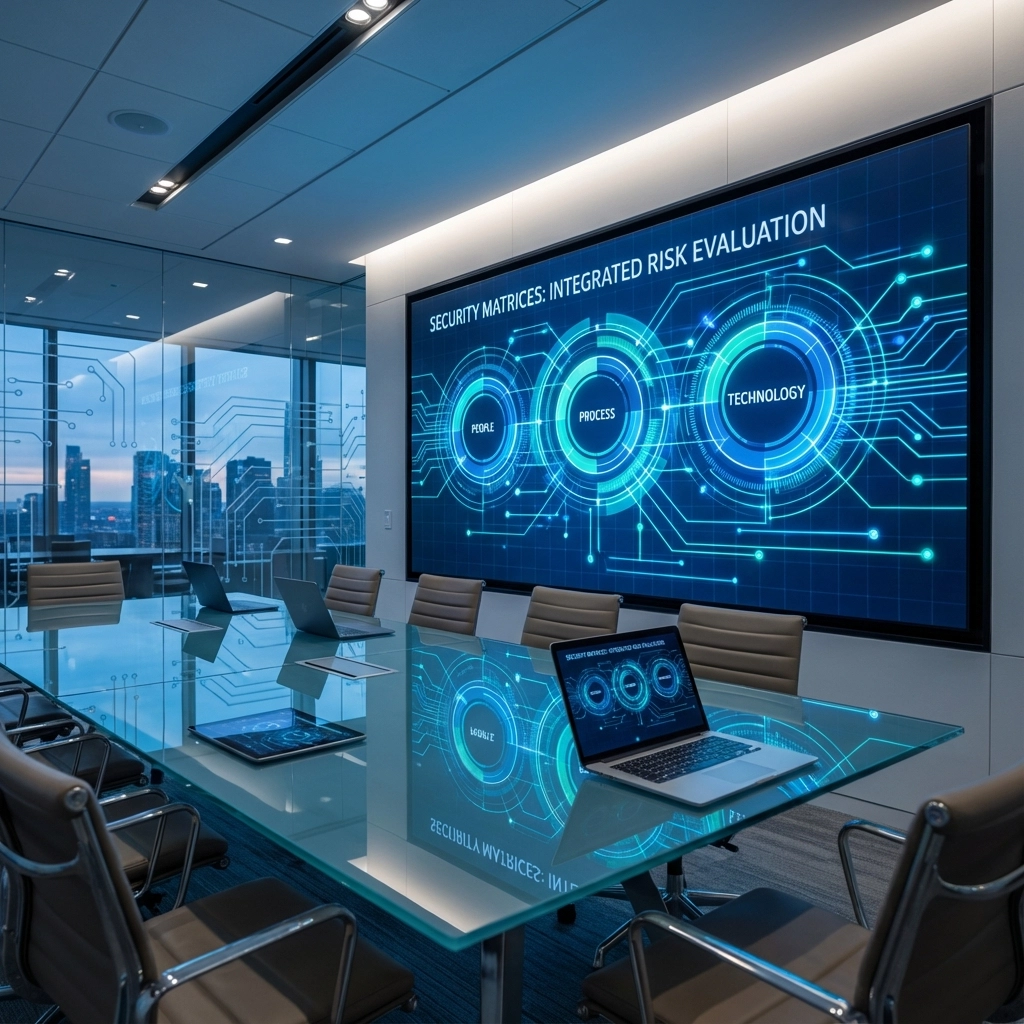
People Assessment involves evaluating current staffing models, identifying skill gaps that exist between physical security and cybersecurity teams, and determining training requirements for cross-domain competency development. Many organizations discover that their physical security personnel lack cybersecurity awareness, while IT professionals may not fully understand the physical security implications of their technical decisions.
Process Evaluation examines existing security policies, incident response procedures, and governance structures to identify areas where integration can improve effectiveness. Organizations frequently find that their physical security and cybersecurity teams maintain separate threat intelligence sources, communication channels, and reporting structures: creating opportunities for improving coordination and efficiency.
Technology Analysis focuses on identifying integration opportunities between existing physical security systems and cybersecurity tools. This assessment should examine network architectures, data sharing capabilities, and monitoring platforms to determine how effectively current systems support integrated security operations.
Organizations can leverage established frameworks such as the NIST Cybersecurity Framework to structure their maturity assessments, applying core functions – Identify, Protect, Detect, Respond, and Recover – across both physical and cyber domains to create comprehensive security posture evaluations.
Training and Program Building: The Critical Bridge
Cybersecurity awareness training serves as the essential bridge between physical security and cybersecurity domains, as human behavior represents the common factor that influences security effectiveness across both areas. Effective training programs must address the interconnected nature of physical and cyber threats while building an organizational culture that supports integrated security thinking.
Comprehensive cybersecurity training initiatives should include modules that help employees understand how their physical actions can impact digital security and vice versa. For example, training should address proper handling of removable media found in physical locations, recognition of social engineering attempts that combine physical presence with digital manipulation, and an understanding of how physical access controls relate to data protection objectives.
Program building activities must establish clear connections between physical security protocols and cybersecurity policies. This includes developing unified incident response procedures that address scenarios involving both domains, creating communication channels that enable rapid information sharing between physical and cyber security teams, and establishing joint training exercises that test integrated response capabilities.
Educational institutions face particular challenges in this regard, as they must balance security requirements with open campus environments and diverse user populations. Corporate organizations, meanwhile, must consider how remote work arrangements affect the traditional boundaries between physical security and cybersecurity controls.
Practical Implementation Steps for Leaders
Organizations seeking to implement integrated security frameworks should begin with executive-level commitment to cross-functional collaboration. This involves establishing joint reporting structures that break down traditional silos between facilities, IT, and security departments while creating accountability mechanisms that incentivize integrated thinking.
Risk Assessment Integration represents the next critical step, requiring organizations to develop unified risk registers that capture threats spanning both physical and cyber domains. This process should identify scenarios where physical breaches could lead to cyber incidents and vice versa, enabling more comprehensive threat modeling and mitigation planning.
Technology Convergence initiatives should prioritize interoperability between existing systems while gradually introducing unified monitoring and management platforms. Organizations should avoid wholesale replacement of functional systems, instead focusing on integration opportunities that enhance visibility and coordination without disrupting operational effectiveness.
Skill Development programs must address the growing need for security professionals who understand both physical security and cybersecurity principles. This includes cross-training existing staff, recruiting personnel with diverse security backgrounds, and establishing partnership relationships with educational institutions that can support ongoing professional development.
Measuring Success and Continuous Improvement
Effective measurement of integrated security programs requires metrics that capture both individual domain performance and cross-functional effectiveness. Organizations should establish key performance indicators that evaluate threat detection speed, incident response coordination, and overall security posture improvement resulting from integration efforts.
Regular assessment cycles should examine the effectiveness of training programs, policy implementation, and technology integration initiatives. These evaluations should consider feedback from both security professionals and end-users to ensure that integrated security measures support rather than impede organizational productivity.
Continuous improvement processes must remain adaptable to evolving threat landscapes and changing organizational needs. As new technologies emerge and threat actors develop more sophisticated attack methods, integrated security frameworks must evolve accordingly while maintaining their fundamental focus on comprehensive organizational protection.
Ready to Transform Your Security Approach?
Implementing an integrated physical security and cybersecurity framework requires specialized expertise and proven methodologies. Credo Cyber Consulting LLC provides comprehensive cybersecurity consulting services that help organizations develop and implement integrated security strategies tailored to their unique operational requirements.
Our mission-driven approach combines extensive experience across corporate, higher education, and K-12 environments with a practical understanding of real-world implementation challenges. Whether you need comprehensive program development, targeted training initiatives, or executive-level strategic guidance, Credo Cyber Consulting delivers results-focused solutions that strengthen your entire security posture.
Contact us today to discuss how our cybersecurity training and program building expertise can help your organization achieve true security integration. We also offer engaging speaking and event services that can help your leadership team understand the critical importance of converged security approaches.
Learn more about our services or contact our team to schedule a consultation that will set your organization on the path toward comprehensive security excellence.