


In an era when organizational assets face unprecedented threats from digital adversaries and physical vulnerabilities, the imperative for systematic security risk management has never been more urgent. Organizations across all sectors require structured approaches that transcend reactive security postures and embrace proactive, mission-driven protection strategies.
Security risk management represents a fundamental shift from ad-hoc security measures to comprehensive frameworks that systematically identify, assess, mitigate, and monitor threats. As such, this structured approach enables organizations to transform security from a cost center into a strategic enabler of organizational objectives.
Understanding Security Risk Management Fundamentals
Security risk management constitutes a systematic methodology for protecting organizational assets through structured threat assessment and mitigation strategies. Rather than responding to incidents after they occur, this approach empowers organizations to anticipate, prepare for, and prevent security breaches across both cyber and physical domains.
The foundation of effective security risk management rests upon three critical pillars: comprehensive asset identification, systematic threat assessment, and strategic control implementation. Organizations that master these fundamentals establish robust security postures that adapt to evolving threat landscapes while maintaining operational efficiency.

Contemporary threat environments demand integrated approaches that address cybersecurity awareness training alongside physical security considerations. For instance, a university campus must simultaneously protect against ransomware attacks targeting student information systems and unauthorized physical access to sensitive research facilities. This convergence necessitates unified risk management frameworks that address both domains comprehensively.
The Five-Step Mission-Driven Framework
The mission-driven protection framework provides organizations with a systematic approach to security risk management that aligns directly with organizational objectives and operational requirements.
Step 1: Establish Organizational Context
Organizations must first define clear, measurable security objectives that align with their mission and operational requirements. This foundational step involves establishing risk tolerance thresholds, identifying key stakeholders, and creating decision-making protocols for security investments.
Corporate environments typically prioritize intellectual property protection and customer data security, while educational institutions focus on student privacy protection and the preservation of academic freedom. K-12 schools emphasize student safety and educational continuity alongside data protection requirements.
Step 2: Comprehensive Risk Identification
The risk identification process represents the most critical component of effective security risk management. Organizations cannot address threats they have not identified, making comprehensive asset inventories and threat assessments paramount to successful security programs.
This phase requires systematic cataloging of all organizational assets, including hardware systems, software applications, data repositories, physical facilities, and human resources. Additionally, organizations must identify potential threat sources ranging from cybercriminals and malicious insiders to natural disasters and system failures.
Step 3: Risk Analysis and Evaluation
Following comprehensive risk identification, organizations must analyze the likelihood and potential impact of each identified threat. This evaluation process enables strategic prioritization of security investments based on quantitative and qualitative risk assessments.
Modern risk analysis incorporates both cyber and physical security considerations. For example, a corporate data center faces risks from cyberattacks targeting server infrastructure and physical threats such as unauthorized access, natural disasters, and utility failures. A comprehensive analysis evaluates these interconnected risks holistically.

Step 4: Strategic Control Selection and Implementation
Control selection requires careful consideration of organizational requirements, threat landscapes, and available resources. Effective cybersecurity consulting emphasizes selecting controls that address multiple threat vectors while maintaining operational efficiency.
Technical controls include firewalls, intrusion detection systems, and access control mechanisms. Administrative controls encompass security policies, cybersecurity training programs, and incident response procedures. Physical controls address facility security, environmental monitoring, and asset protection measures.
Step 5: Continuous Monitoring and Assessment
Risk mitigation is not a one-shot deal. The dynamic nature of contemporary threat environments necessitates continuous monitoring and periodic reassessment of security controls. Organizations must validate control effectiveness, monitor threat intelligence, and adjust security measures based on evolving risk profiles.
This ongoing process includes security log analysis, vulnerability assessments, penetration testing, and regular updates to cybersecurity awareness training. Organizations that implement robust monitoring capabilities maintain situational awareness and respond proactively to emerging threats.
Bridging Cyber and Physical Security Convergence
The convergence of physical and cyber security domains creates both opportunities and challenges for contemporary organizations. Traditional security silos no longer suffice in environments where cyber threats can manifest as physical consequences and physical breaches can enable cyber attacks.
Educational institutions exemplify this convergence challenge. A university’s physical access control system, typically networked and managed through centralized platforms, represents potential entry points for cyber adversaries. Conversely, successful cyber attacks against campus systems can compromise physical security measures, creating cascading vulnerabilities.
Corporate environments face similar convergence challenges. Industrial control systems, building automation networks, and physical security systems increasingly rely on networked infrastructure that requires integrated cybersecurity and physical security approaches.

Implementation Framework for Different Sectors
Corporate Sector Implementation
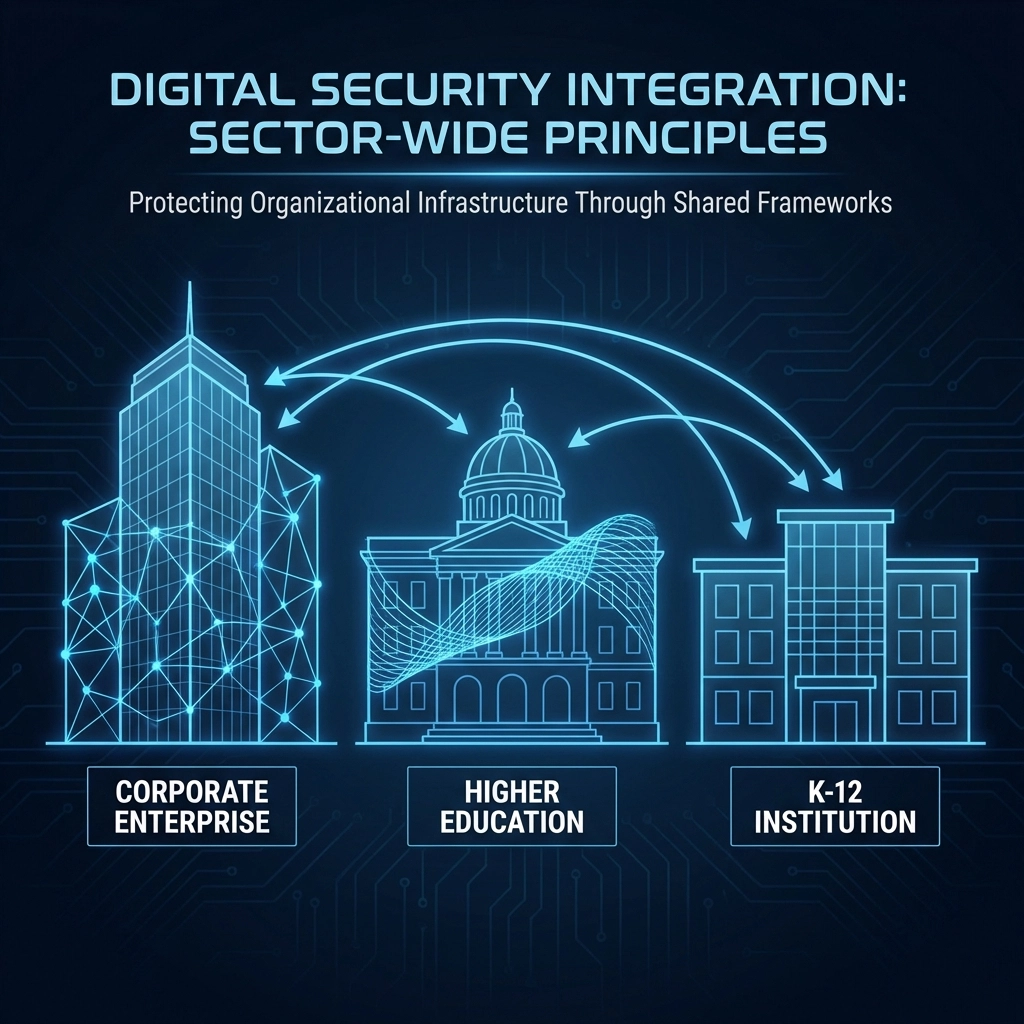
Corporate organizations typically have greater resources for implementing comprehensive security risk management. These entities benefit from structured approaches that integrate enterprise risk management with cybersecurity consulting services and physical security operations.
Key implementation considerations include executive leadership engagement, cross-functional security teams, and integration with existing business continuity planning. Corporate entities should establish security governance structures that report directly to executive leadership and maintain accountability for security risk management outcomes.
Higher Education Implementation
Higher education institutions face unique challenges related to academic freedom, diverse stakeholder communities, and limited security resources. These organizations require flexible frameworks that balance security requirements with educational mission objectives.
Effective implementation strategies include faculty and staff cybersecurity awareness training programs, student privacy protection measures, and research data security protocols. Universities benefit from phased implementation approaches that prioritize critical systems while building institutional security capabilities over time.
K-12 Education Implementation
K-12 educational institutions typically operate with constrained resources while maintaining responsibility for student safety, data privacy, and educational continuity. These organizations require streamlined approaches that maximize security effectiveness within budget constraints.
Implementation strategies should emphasize essential controls, staff cybersecurity training, and opportunities to partner with state and federal resources. K-12 institutions benefit from regional collaboration and shared security resources, reducing individual organizational burdens.
Security Risk Management Implementation Checklist
Preparation Phase:
- Define organizational security objectives and risk tolerance levels
- Establish a security governance structure with executive sponsorship
- Assemble cross-functional security team including IT, facilities, and operations
- Identify regulatory and compliance requirements applicable to organization
Assessment Phase:
- Complete comprehensive asset inventory including cyber and physical assets
- Conduct threat assessment covering cyber, physical, and human threat sources
- Perform vulnerability assessments of critical systems and facilities
- Evaluate existing security controls and identify gaps
Implementation Phase:
- Select a security framework appropriate for organizational context
- Develop security policies and procedures addressing cyber and physical domains
- Implement technical controls including network security and access management
- Deploy physical security measures including access control and monitoring
- Launch a cybersecurity awareness training program for all personnel
Monitoring Phase:
- Establish continuous monitoring capabilities for cyber and physical security
- Implement incident response procedures with clear escalation protocols
- Schedule periodic risk assessments and control effectiveness reviews
- Maintain threat intelligence awareness and adjust controls accordingly
Selecting Appropriate Risk Management Frameworks
Organizations benefit from established frameworks that provide structured approaches to implementing security risk management. The NIST Risk Management Framework is the most widely adopted standard, suitable for both private and public-sector organizations seeking comprehensive integration of cybersecurity and physical security.
ISO 31000 provides international standards applicable across diverse organizational contexts, while ISO 27005 offers specialized guidance for information security risk management. Organizations should evaluate frameworks based on regulatory requirements, organizational complexity, and available implementation resources.
Educational institutions often benefit from frameworks that accommodate academic freedom requirements and diverse stakeholder communities. Corporate organizations typically require frameworks that integrate with existing enterprise risk management processes and support business objectives.
Moving Forward with Mission-Driven Protection
Effective security risk management transforms organizational security from a reactive cost center to a proactive business enabler. Organizations that implement systematic approaches to cyber and physical security create competitive advantages through enhanced resilience, stakeholder confidence, and operational continuity.
The convergence of cyber and physical security domains requires integrated approaches that comprehensively address interconnected risks. As threat landscapes continue to evolve, organizations that master systematic risk management principles will maintain the adaptive capabilities essential for long-term success.
Book a consulting call with Credo Cyber Consulting LLC. In a brief session, our team will outline a mission-driven approach to security risk management that integrates cyber and physical threats in alignment with your objectives.